
Questions, tone and difficult feedback
Three videos for conversations that keep going wrong
Compare Hirenze’s follow-up questions, Kim Chang-ok’s account of tone, and Keeyong Universe’s workplace feedback example. Try one change in a suitable conversation.

If you get stuck on the next question, start with Hirenze at 01:37–04:14. For how tone changes an explanation, try Kim Chang-ok TV at 03:54–06:13. For difficult feedback at work, try Keeyong Universe at 25:05–26:27.
| Creator · subscribers | Situation | First segment |
|---|---|---|
| Hirenze · about 663K | Find a question in what was just said | A conversation about a walk · 01:37–04:14 |
| Kim Chang-ok TV · about 1.56M | Hear how the same explanation can sound different | A customer-call anecdote · 03:54–06:13 |
| Keeyong Universe · about 6,790 | Ask about a differently understood deadline | Workplace feedback · 25:05–26:27 |
Basis: examples and explanation style; YouTube counts checked November 1, 2026. All three videos are Korean. English captions have not been verified.
Hirenze — find the next question in the other person’s words
The 9-minute-50-second video distinguishes small talk in close relationships from business settings. Start with 01:37–04:14 for friends or partners. Hirenze contrasts abruptly asking about tomorrow’s plans after hearing about a walk with continuing the walking story. Hearing both lines makes it easier to compare whether a question responds to what was said, rather than simply counting questions. From 03:57, she distinguishes actions and feelings when explaining how to ask “how.”


Recall one recent exchange. Choose a subject the other person introduced—a meal, walk or film—and write one question in words you would actually use. Then consider how to add your own experience. You need not memorize the sample lines.
The 2025 video later moves to sharing your own story and workplace small talk. The description and ending promote the creator’s book.
 01:37–04:14 · 9m 50s totalWatch segment Meet the creatorHirenzeThe 9-minute-50-second video distinguishes small talk in close relationships from business settings.Start with 01:37–04:14 for friends or partners. Hirenze contrasts abruptly asking about tomorrow’s plans after hearing about a walk with continuing the walking story. Hearing both lines makes it easier to compare whether a question responds to what was said, rather than simply counting questions. From 03:57, she distinguishes actions and feelings when explaining how to ask “how.”Read creator guide
Kim Chang-ok TV — hear the difference made by tone
This 15-minute-16-second discussion begins with a public servant’s difficulty explaining rules to citizens. It uses an extended anecdote rather than a list of ideal phrases.
At 03:54–06:13, Kim recounts an insurance call after a family death. He reenacts a cheerful service voice and then a quieter response after hearing the situation. The coverage explanation stays the same; how it is delivered sounds different.
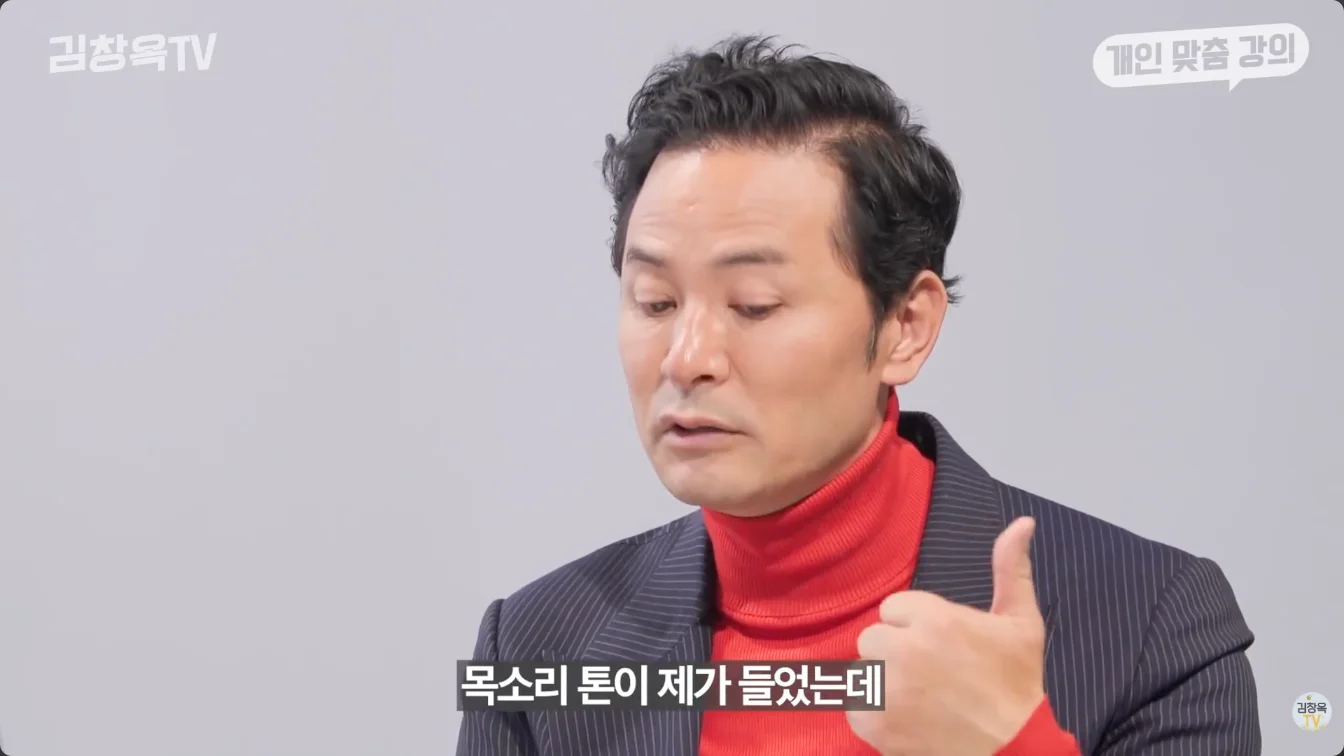

This is an anecdote told by the speaker. Use it to ask whether you made room to hear the other person’s situation, rather than as a method for controlling their feelings. A service interaction does not transfer unchanged to a close relationship.
The 2021 video received production support from Korea’s Ministry of Employment and Labor. Later employment-program information is historical and outside this recommendation. From 13:51, the closing returns to treating someone courteously as well as saying something correct.
 03:54–06:13 · 15m 16s totalWatch segment Meet the creatorKim Chang-ok TVThis 15-minute-16-second discussion begins with a public servant’s difficulty explaining rules to citizens.It uses an extended anecdote rather than a list of ideal phrases.Read creator guide
Keeyong Universe — open a difficult feedback conversation
At 25:05–26:27 of a 39-minute-15-second slide lecture, Keeyong uses a deadline understood differently by two colleagues. The example separates an expectation that work would finish this week from an observation that, in the meeting, even next week seemed difficult. It then asks how the other person understood the deadline.
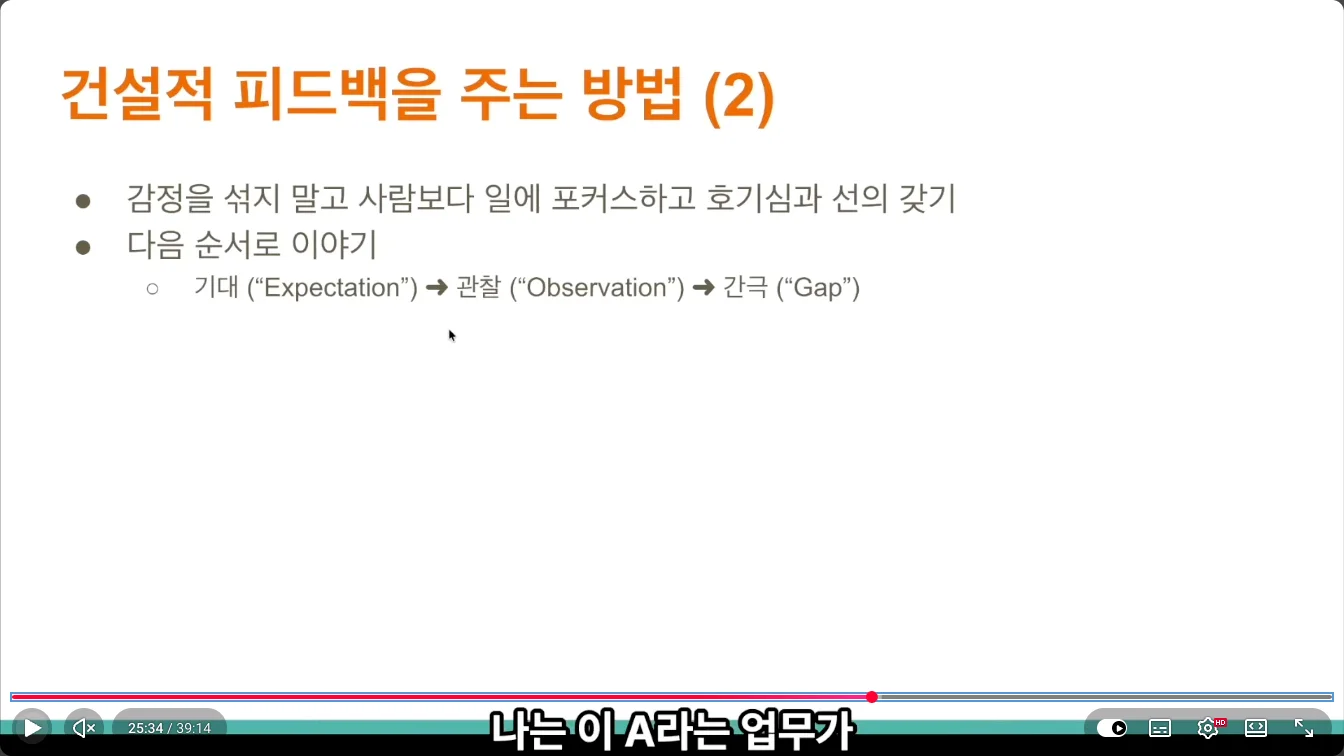

Compare opening with an accusation to separating what you observed from what you do not yet know. For a recent work conversation, write the expected schedule and what you heard in the meeting separately.
At 26:35–27:54, the speaker discusses recovering when the wording is less gentle than intended: return to the shared purpose, pause if the exchange becomes heated, then decide the next action. The 2026 video’s description promotes his leadership book.
 25:05–26:27 · 39m 15s totalWatch segment Meet the creatorKeeyong UniverseAt 25:05–26:27 of a 39-minute-15-second slide lecture, Keeyong uses a deadline understood differently by two colleagues.The example separates an expectation that work would finish this week from an observation that, in the meeting, even next week seemed difficult. It then asks how the other person understood the deadline.Read creator guide
To hear perspectives beyond conversation technique, explore book, humanities and art creators. This article compares examples and delivery; it does not establish the effectiveness of a communication intervention. Screenshots preserve the originals.