
Define the task, the boundary and the checks
How much work should you delegate to AI?
Start with results you can check. Three creators explain work context, execution permissions and ways to test whether your checks miss important mistakes.
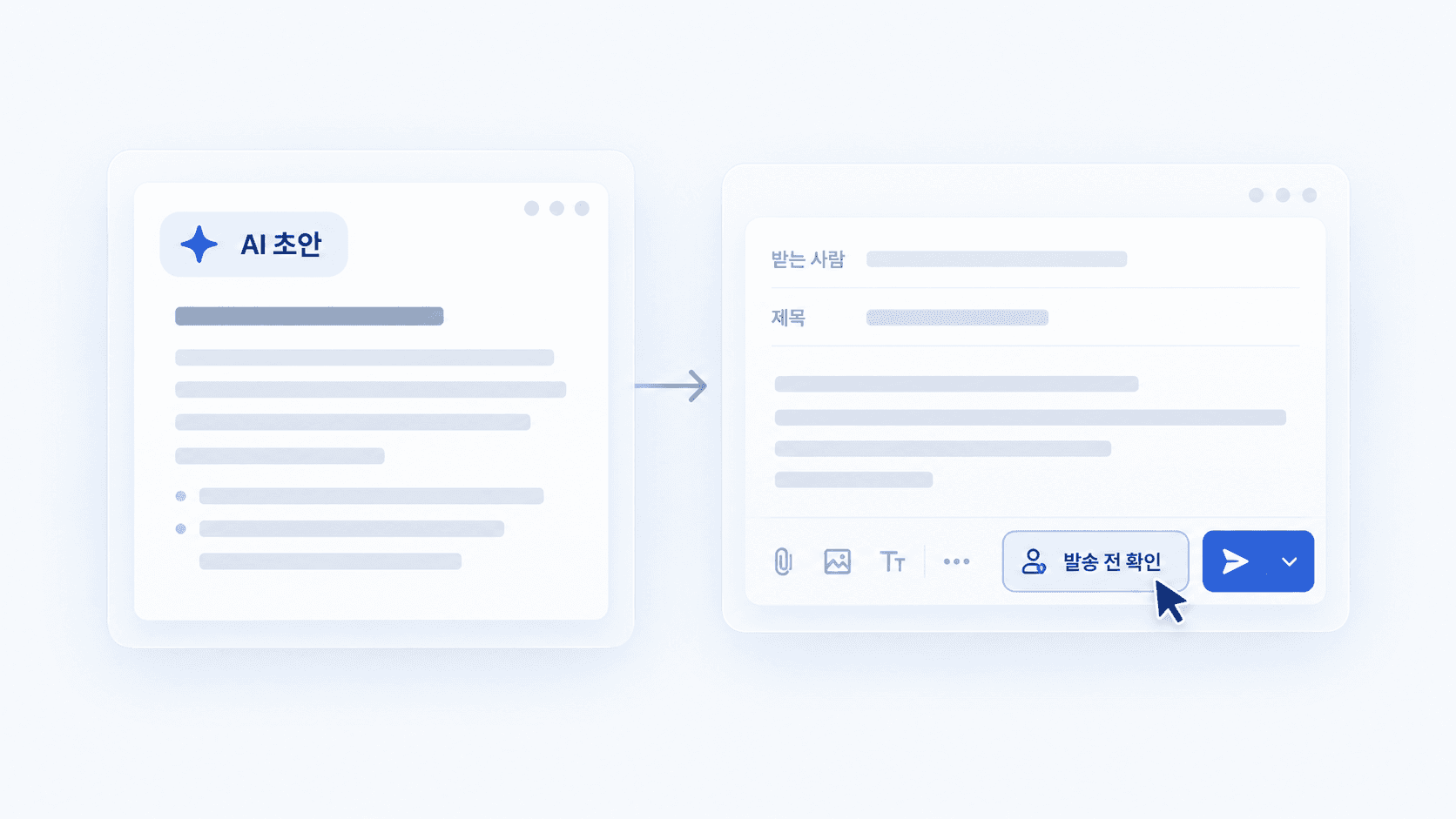
Start by delegating results you can check, and put a checkpoint before actions affect original files or other people. What changed, and what it was checked against, matters more than a confident completion message.
Summarizing meeting notes and sending that summary to the whole team can differ by one sentence in a prompt. The consequences of an error differ much more. A draft can be rewritten; a sent message may already influence someone’s decisions.
Content from Yun Jadong, Builder Josh and Matt Pocock separates the problem into context, execution control and verification. Yun and Josh’s sources are in Korean; Matt’s is in English. English captions for the Korean videos have not been verified. Screenshots preserve the originals.
1. Why did something unwanted happen despite detailed instructions?
Yun Jadong’s video describes text being saved despite a request not to save it. His explanation is more specific than an AI deliberately executing a prohibited save command: the editor was connected to iCloud, so typed text was saved automatically. The environment could change the outcome without a separate save action.
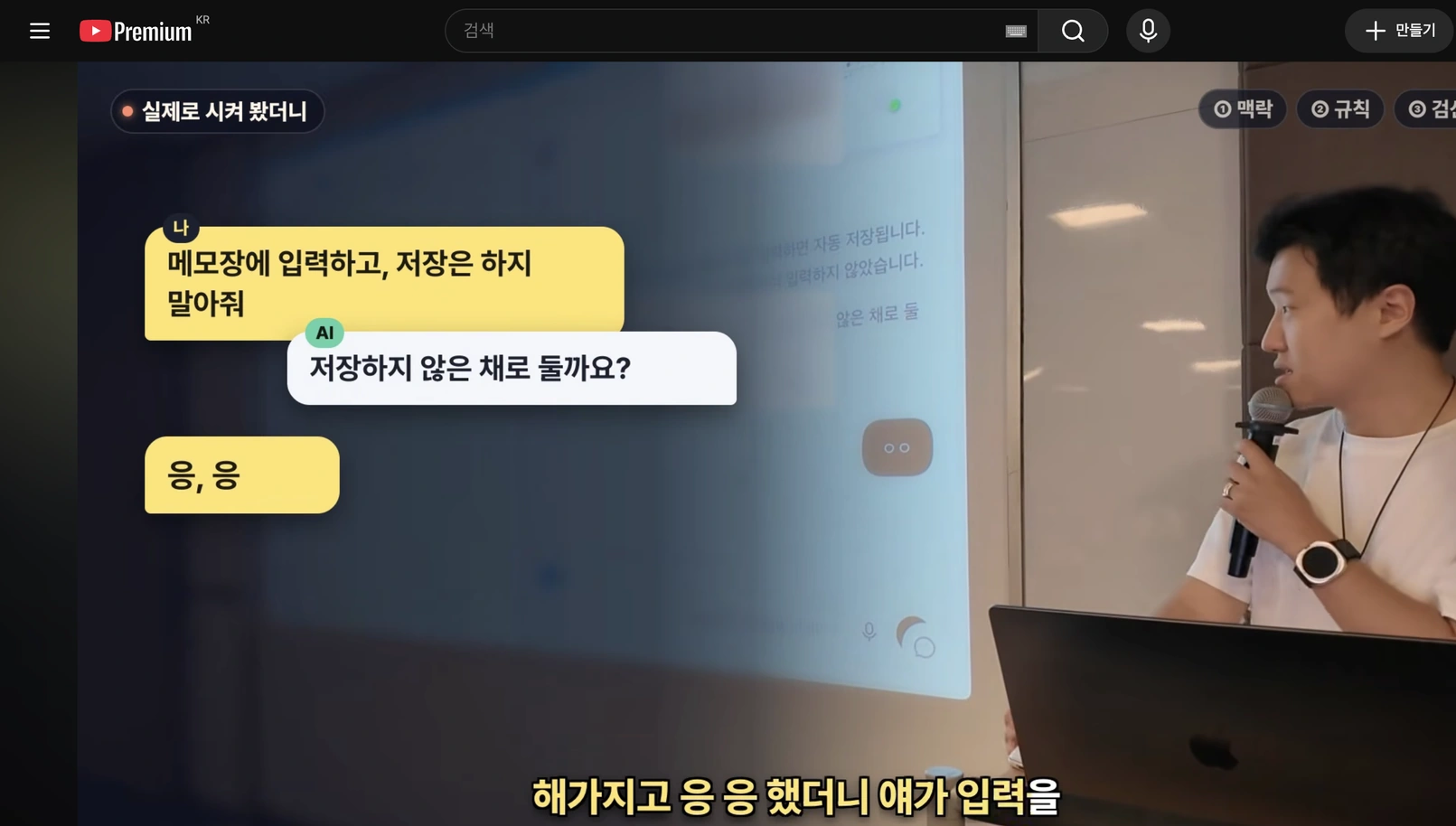

Look beyond prompt length to where the AI enters information and whether that tool automatically saves or shares it. If the original must remain untouched, use a copy and check where the copy itself will be stored.
At 03:39, Yun emphasizes real work context over role-playing instructions: what you are doing, how the output will be used and when it is needed. Repeated conditions can become standing rules. Later, he describes asking AI to compare deduplicated source totals with branch-level totals in a table.
Specify the output and its boundaries
For a weekly performance table, try specifying:
- Purpose: explain differences between branches at Friday’s meeting.
- Output: a table of this week’s and last week’s totals, large differences and the columns used.
- Scope: read the supplied copy and create a separate draft; do not edit the original or transmit it externally.
- Checks: show the duplicate-removal rule, excluded rows and differences from the original totals; ask if the rule is ambiguous.
This is our application of the video’s context, rules and checking ideas. Writing an instruction does not technically prevent an action. Check the data, storage location and actual tool permissions too.
 01:06–01:45 · 03:39–06:02 · 07:06–07:54Watch segment Meet the creatorYun JadongExplains repetitive-work automation with AI and coding tools.The lecture connects work context, recurring rules and recalculation to concrete requests.Read creator guide
2. Can you delegate sending and editing too?
Distinguish permission to write a reply draft from permission to send it, and permission to propose an edit from permission to overwrite the original.
In Builder Josh’s HOW I AI interview, Imperai CEO Eum Byung-chan argues for separating an agent’s execution from its control mechanism. Instead of relying only on a prompt that says “don’t,” a separate control checks whether an attempted action is allowed. His Decision Ledger discussion distinguishes scattered logs from a record of a particular decision.
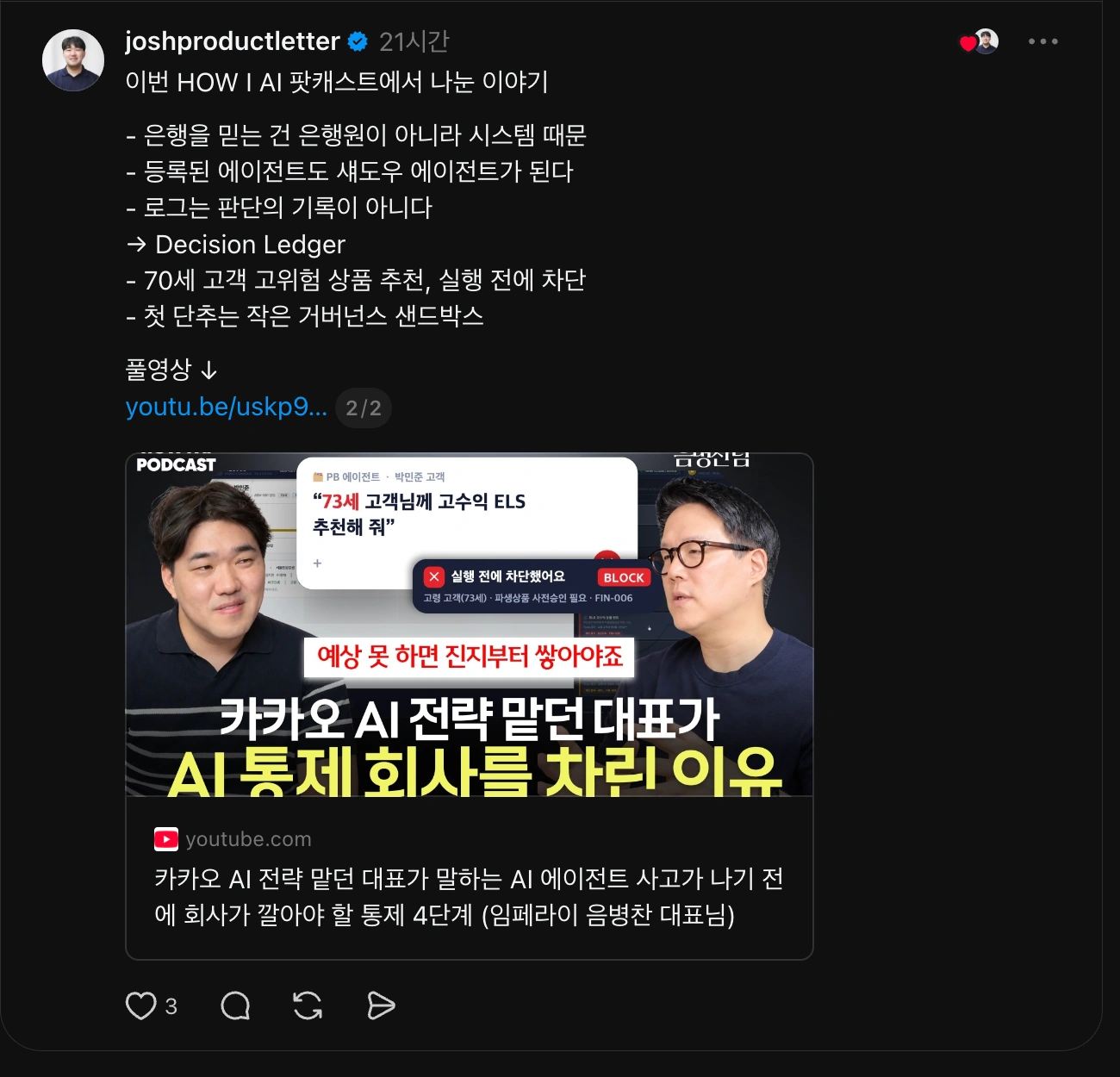

The interview includes explanations and demonstrations of the guest’s Toren product. It is not independent research proving accident prevention. The useful question here is which actions in your work need separate authorization.
Define what “keep going” includes
For customer support, begin with fact gathering and a draft using an organization-approved tool and permitted material. If you have not established whether customer data may be entered, test with a fictional example first. Before sending, review the recipient, attachments, promises and supporting sources together. Approval is meaningful only if the reviewed draft matches what will actually be sent.
If the tool can change originals or send externally, check whether its permissions can be limited to this task. Read/write separation and pre-execution approval depend on the service. If those boundaries are unavailable, you can begin with drafts that a person transfers manually.
Pressing an approval button does not establish correctness. If the reviewer lacks the expertise or time to judge the output, adding more approvals will not solve that problem. Divide the work into pieces they can assess, or involve someone familiar with the task.
 19:00–28:00 · execution controls and decision recordsWatch segment Meet the creatorBuilder JoshInterviews practitioners about using AI in products, businesses and teams.HOW I AI explores adoption experiences and operating decisions.Read creator guide
3. If AI ran the checks, is the job finished?
Yun proposes delegating recalculation as well as production, with a person reviewing the verification results. That may reduce repetitive work. But what if the check misses an important mistake?
Matt Pocock’s short video explores this through mutation testing: deliberately changing code and seeing whether existing tests detect the change. One example replaces a string with an empty string. Mutations that still pass can reveal what a test fails to notice.
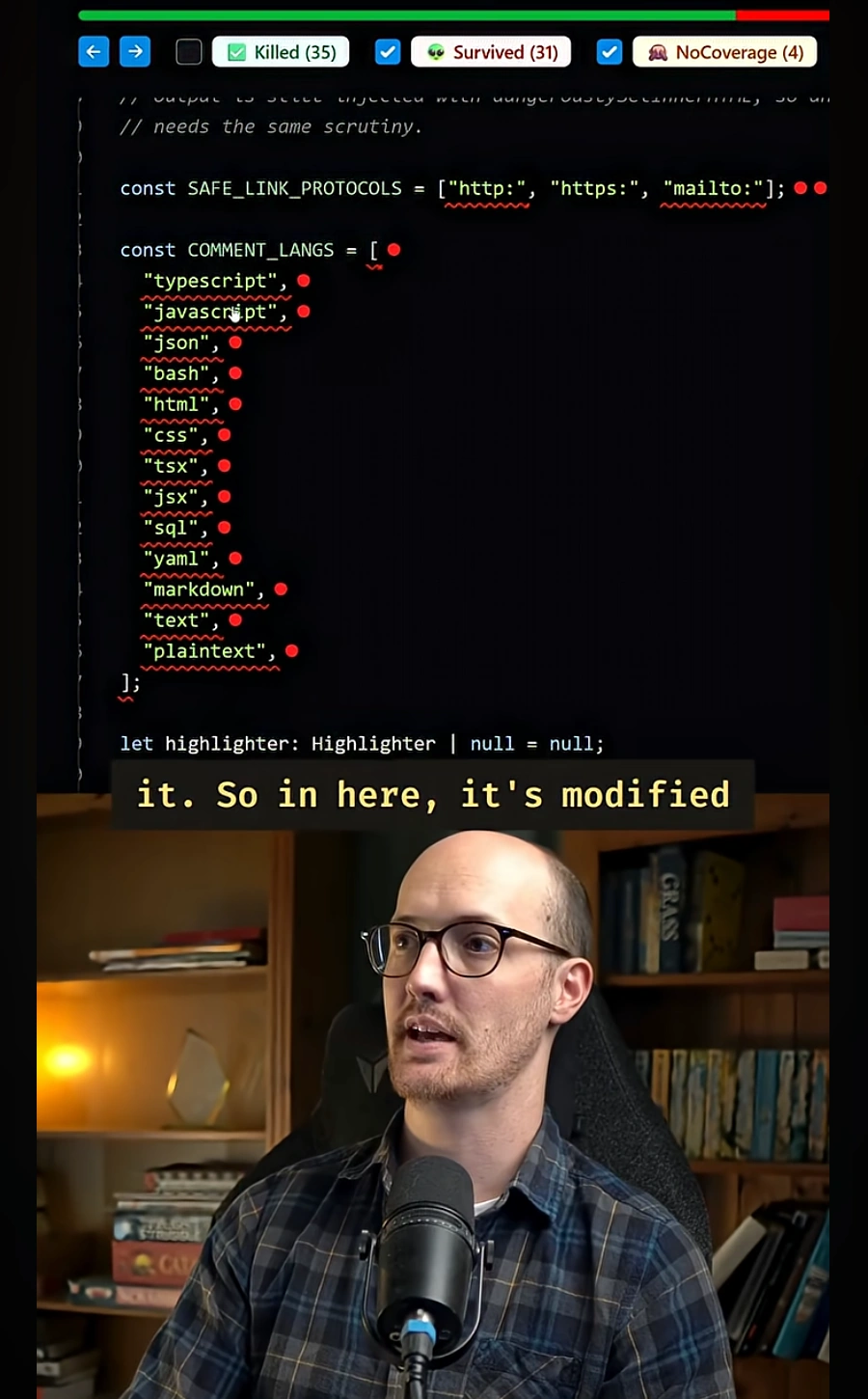

Not every surviving mutation indicates a defective test. The Stryker documentation on equivalent mutants explains that some changes leave the program’s behavior equivalent. Examine whether the remaining mutation changes behavior before chasing a score of 100%.
This tests the usefulness of tests; it does not prove that all defects have been found. Stryker is a code mutation-testing tool, not a direct method for judging documents or business approvals.
Check examples where your verification could fail
In the weekly table, matching grand totals does not establish correct classification: a row can have the wrong branch label while the total remains unchanged. Alongside totals, inspect the grouping rules and some underlying rows.
You might also introduce a duplicate or omission into a disposable copy and see whether the checks detect it. That is an editorial application of the idea of preparing failure examples, not a claim to have reproduced code mutation testing in a spreadsheet. Passing a few samples cannot establish accuracy across the whole file. Choose the checking scope according to the consequences of error.
 00:00–00:58 · EnglishWatch segment Meet the creatorMatt PocockTeaches TypeScript, web development and AI engineering through practical examples.This video changes code to examine whether its tests detect the difference.Read creator guide
Define the boundary for one task
These sources address different gaps: context and recurring rules, execution permissions and decision records, and weaknesses in the checking process itself. For your next task, answer four questions:
- Delegate up to here: what inputs and output are included?
- Stop here: what needs a person’s check before edits, sending or publication?
- Compare against this: which originals, criteria and failure examples will be used?
- Recover this way: how will you inspect and reverse changes?
Begin with a copy or draft. Before widening the scope, check the result, adherence to boundaries and ability to recover. Neither approving every action forever nor granting everything after one success replaces that decision.
A useful threshold is whether you can explain what changed and why it is acceptable. Continue with checking an AI agent’s access to API keys to examine one concrete permission boundary.
Creators in this guide
- Yun JadongExplains repetitive-work automation with AI and coding tools. The lecture connects work context, recurring rules and recalculation to concrete requests.
- Builder JoshInterviews practitioners about using AI in products, businesses and teams. HOW I AI explores adoption experiences and operating decisions.
- Matt PocockTeaches TypeScript, web development and AI engineering through practical examples. This video changes code to examine whether its tests detect the difference.