
Test the benefit and the cost of moving
Should you switch whenever a new AI model arrives?
Use scores to find candidates, then compare your own tasks. Include quality, time, usage costs and the effort of moving prompts and tools.

Separate a reason to try a new model from a reason to replace your current one. Check what improves in your recurring work and what it costs to move before deciding.
A repeated failure in your current workflow can justify a small test. If the results already meet your needs, every launch need not trigger a new setup. These Korean-language comparison posts offer ways to assess a decision, not a model ranking. Screenshots preserve their original language; source claims and our suggested checks are distinguished below.
1. A higher score—but better at your work?
ZeroCho TV’s October 15 Threads sequence discusses scores, cost and speed, then says there is little immediate desire to switch. It uses the account’s bot narrator to organize the creator’s curation and experience; it is not a transcript of a spoken remark.


The relevant criterion is whether benefits in your own work justify that effort. An aggregate score can help identify a candidate, but adherence to your code constraints or the tone of your reports needs its own check.
State what currently falls short
Replace “I want a smarter model” with a concrete failure: “It drops qualifications from report summaries,” or “The screen looks right, but existing tests fail.” Include tasks the current model does well. Solving one difficult example does not establish improvement across everyday work.
 Parts 2/6, 3/6 and 5/6Read original Meet the creatorZeroCho TVTeaches JavaScript, TypeScript and web development, with examples of AI in development work.This sequence separates a score announcement from a personal switching decision.Read creator guide
2. Under what conditions is it faster or cheaper?
Uncle Jobs’ October 14 post shares a comparison image with model outputs, costs and times. Alongside the author’s strong opinions, the comments ask about reasoning effort and usage limits.
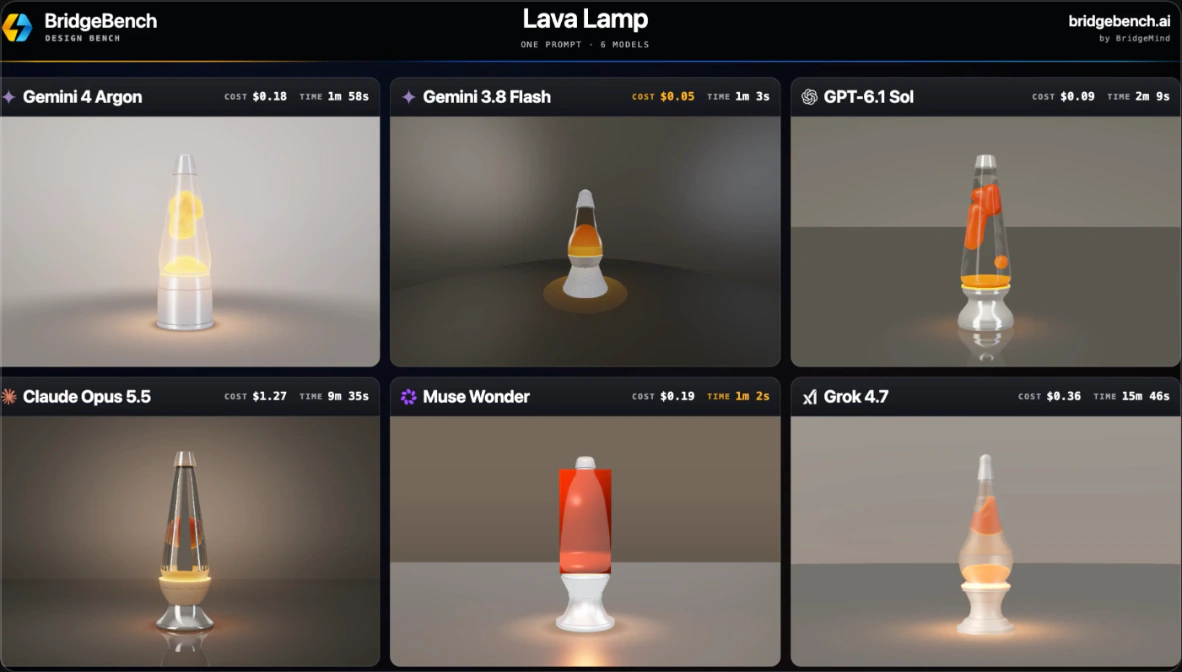

These comments show questions some users asked. They neither represent every user nor constitute an independent experiment. Treat the author’s judgments as opinions and examine the conditions behind them.
Record more than the model name
Reasoning settings, search or execution tools, and conversation history can change the comparison. Align conditions where possible, then compare again in the settings you will actually use. Settings called high or max across products do not necessarily allocate equal computation.
- Quality: did the result meet the initial criteria, and what fact-checking or code repair remained?
- Time: separate the first response from a usable result after follow-up and review.
- Cost: for APIs, inspect usage and billing components; for subscriptions, inspect plan limits and extra charges. A subscription price is not directly comparable to a token rate.
- Switching effort: include prompts, files, integrations and learning the new setup.
This is a suggested comparison record. INFLFEED did not run these models under matched conditions or establish a universal saving.
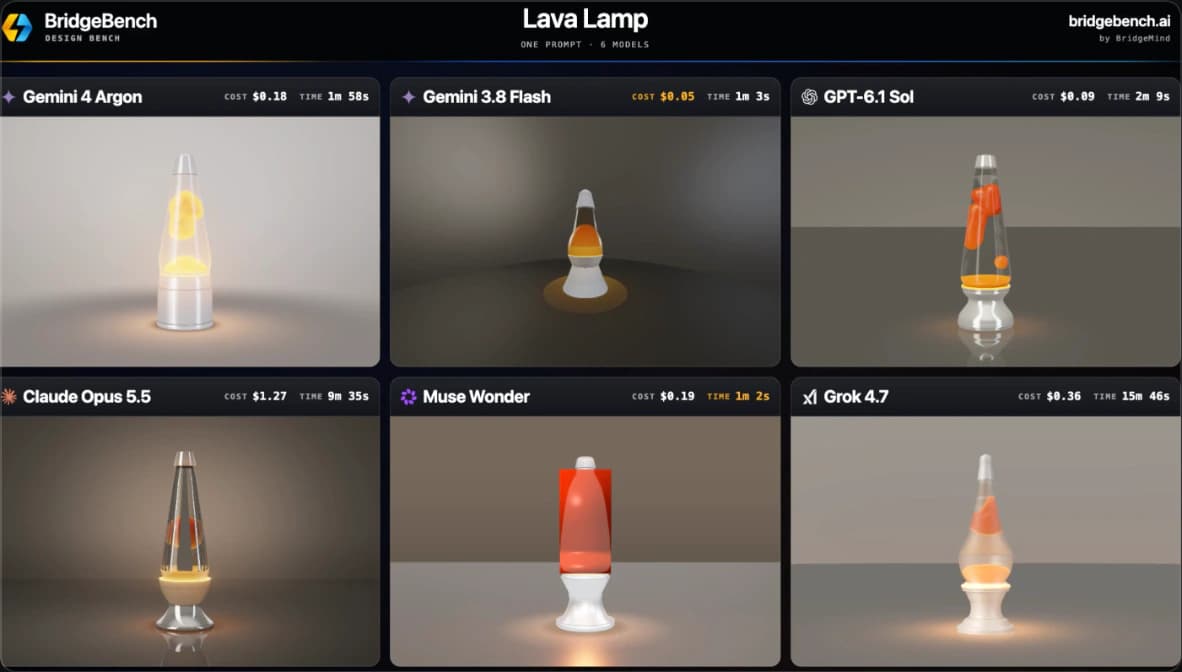 Comparison image and public commentsRead original Meet the creatorUncle JobsDiscusses applying AI trends to work, automation and workflows.The post and comments raise practical questions about reasoning settings and usage limits.Read creator guide
3. How much confidence belongs in a high score?
CHOI’s October 15 sequence covers TheoPhysEval, a theoretical-physics evaluation. Alongside the headline result, it discusses permitted tools, reasoning settings and the number of runs.


CHOI also describes experts revisiting initially incorrect-looking answers and correcting problems in reference answers. This does not mean a model is right if it insists confidently. It illustrates checking the evidence behind an initial judgment.
The paper’s methods and analysis describe one complete evaluation run per agent and uncertainty across potential repeated runs. The comparison includes agents with tools, not only models. Physics-task performance cannot be transferred directly to your writing or production code. The original Korean article compared these explanations; it did not reproduce the experiment or independently verify the physics solutions.
Give your comparison a passing criterion
For a summary, list facts and qualifications that must survive. For code, check existing behavior as well as the new feature. For writing, separate accuracy, tone and required revision.
One success is useful evidence. If consistency matters, record differences across repeated attempts. Choose tasks and repetition according to usage and the consequences of failure; no fixed handful of trials guarantees reliability.
 Parts 5/9 and 6/9 · single runs and answer reviewRead original Meet the creatorCHOICovers AI models and tools in Korean.This sequence includes execution conditions and uncertainty alongside evaluation results.Read creator guide
4. Keep the current setup or change part of it?
Familiarity alone need not prevent a test when the current model repeatedly fails or lacks necessary input or tool support. Conversely, keeping it is reasonable when it meets your criteria and a candidate’s advantage is unclear.
You can retain daily summarization and test only a troublesome coding task elsewhere. Include the burden of managing extra tools and subscriptions when deciding whether partial adoption helps.
Choose representative recent inputs—both successful and difficult ones—and confirm you may share them with another service. Record the passing criteria, model/product/settings/tools/date, actual results, revision time and cost, and a decision to keep, partially adopt or switch. Leave a reason to revisit the decision.
You do not need a large evaluation system. A reusable comparison is enough, and mixed results can remain mixed. To examine what “better” means beyond a finished output, continue with AI answers and your own learning.
Creators in this guide
- ZeroCho TVTeaches JavaScript, TypeScript and web development, with examples of AI in development work. This sequence separates a score announcement from a personal switching decision.
- Uncle JobsDiscusses applying AI trends to work, automation and workflows. The post and comments raise practical questions about reasoning settings and usage limits.
- CHOICovers AI models and tools in Korean. This sequence includes execution conditions and uncertainty alongside evaluation results.